

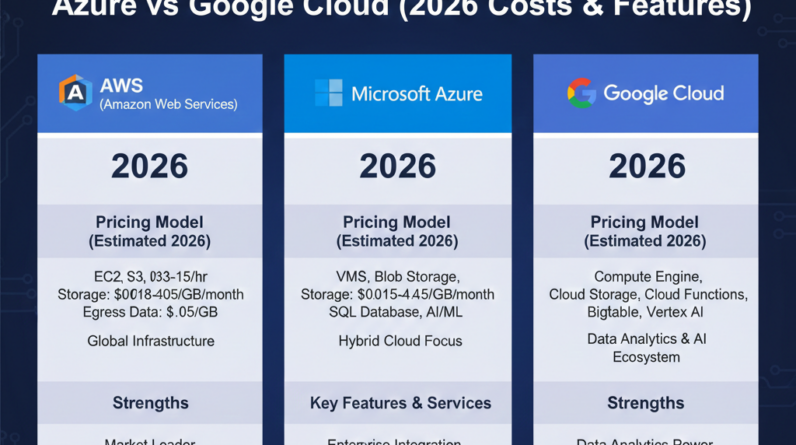
Cloud Computing Services Comparison: AWS vs Azure vs Google Cloud (2026 Costs & Features)

As businesses increasingly shift to cloud-based solutions in 2026, choosing the right provider has become a strategic decision. Amazon Web Services (AWS), Microsoft Azure, and Google Cloud Platform (GCP) continue to dominate the market, each with its own strengths and pricing models. Understanding the differences in costs and features among these platforms can help companies of all sizes make smarter technology investments.
🌐 1. Market Position & Adoption
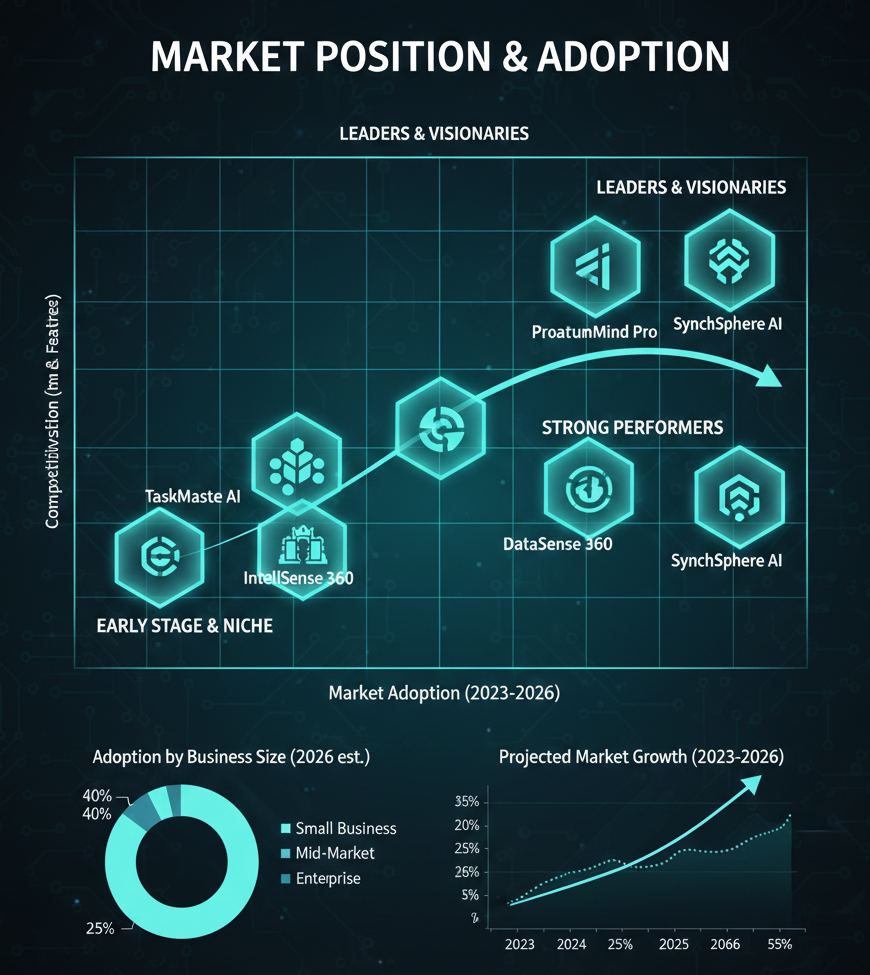
AWS remains the most widely adopted cloud service globally, with a robust portfolio that appeals to enterprises and startups alike. Azure closely follows, favored especially by businesses that already use Microsoft software and want seamless integration. GCP continues to grow, particularly among data-oriented and AI-centric organizations that benefit from its analytics and machine learning tools.
📊 2. Pricing Models & Cost Comparison
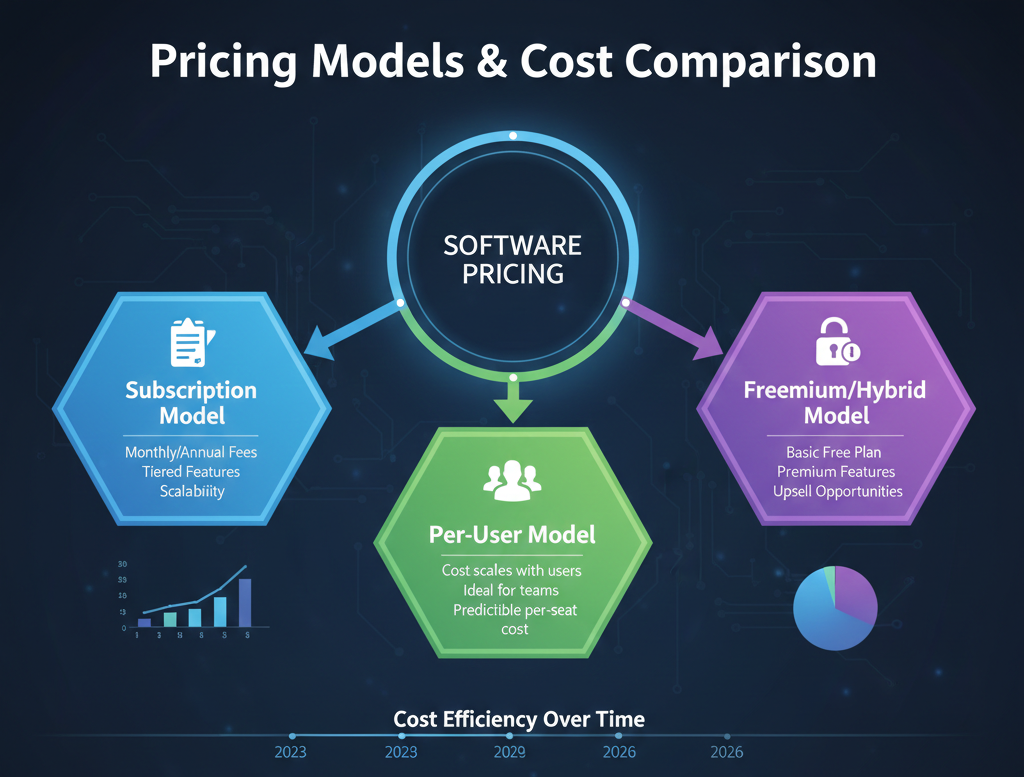
Cloud pricing in 2026 is still complex — and varies depending on your workload, region, and discount plan. All three providers primarily use pay-as-you-go, but the way costs add up can differ significantly.
Common Pricing Approaches:
-
Pay-As-You-Go: Flexible and without long-term contracts.
-
Reserved/Committed Use: Up to ~70-72% discounts for commitments of 1–3 years.
-
Spot/Preemptible Instances: Deep discounts (up to ~90%), ideal for non-critical workloads.
-
Sustained Use Discounts: Particularly helpful on Google Cloud; savings automatically apply based on consistent usage.
General Cost Trends (2026 estimates):
-
Compute Instances: GCP often edges out with slightly lower prices, especially for small-scale or variable workloads.
-
Storage: Roughly similar across all three, but promotional free tiers and credits can affect early adoption costs.
-
Data Transfer & Egress: All three charge for egress (moving data out of cloud networks), and these can be hidden when estimating your total bill.
💡 Cost-saving tip: Long-term commitments and automation tools help reduce unpredictable expenses. Reserved Instances or Savings Plans from AWS and Azure typically deliver deep cost reductions for predictable usage, while Google Cloud rewards regular sustained usage automatically.
⚙️ 3. Core Service Features
Compute & Virtual Machines
-
AWS: Offers one of the largest catalogs of compute services (EC2, Lambda, etc.), suitable for vast workloads.
-
Azure: Excellent choice for Windows-centric environments and companies already invested in Microsoft infrastructure.
-
GCP: Often praised for simplicity and its flexible machine types that let teams fine-tune CPU and memory needs.
Storage & Databases
All three providers support:
-
Object storage (S3, Blob Storage, Cloud Storage)
-
Relational databases (RDS, SQL Database, Cloud SQL)
-
NoSQL and in-memory options
Pricing differences usually come down to access frequency and data volume rather than raw service capability.
AI and Analytics
-
AWS: Uses SageMaker and Bedrock for AI/ML workflows.
-
Azure: Azure Machine Learning and Copilot tie into soft- ware ecosystems like Office 365.
-
GCP: Vertex AI and BigQuery are strong choices for AI and analytics-first workloads.
Security & Compliance
Each platform provides robust security services and identity management. AWS emphasizes granular IAM controls, Azure leverages its Defender and Sentinel security services, and Google Cloud offers Zero Trust frameworks and integrated IAM.
🧠 4. Optimization & Cost Management
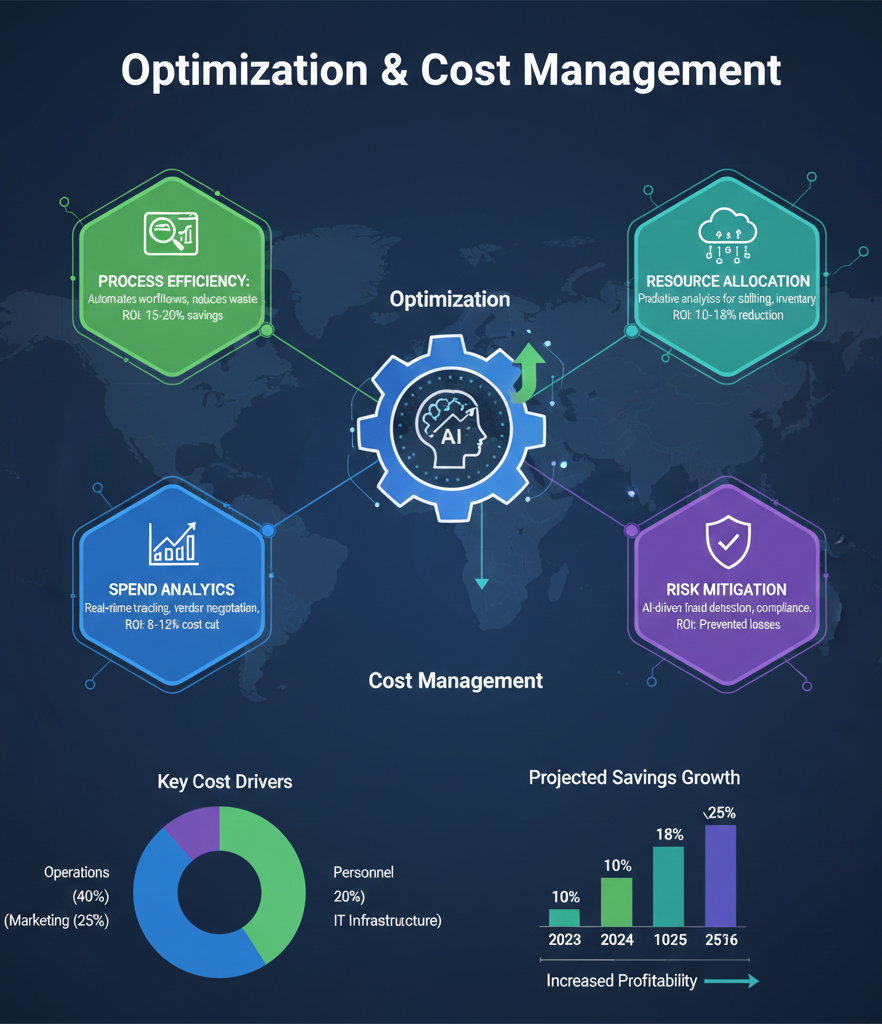
None of these providers are cheap “out of the box” — but they all include tools to help manage and optimize cloud spending:
-
AWS Cost Explorer & Budgets show you where your spend is going.
-
Azure Cost Management + Billing integrates with other Microsoft tools for deeper organizational insights.
-
GCP Billing Reports and automatic sustained use discounts simplify long-term tracking.
A frequent challenge businesses face is unexpected bills due to data transfer or unused resources — which can sometimes increase cloud infrastructure spending by 20–30% if left unmanaged.
🧩 5. Which One Should You Choose?
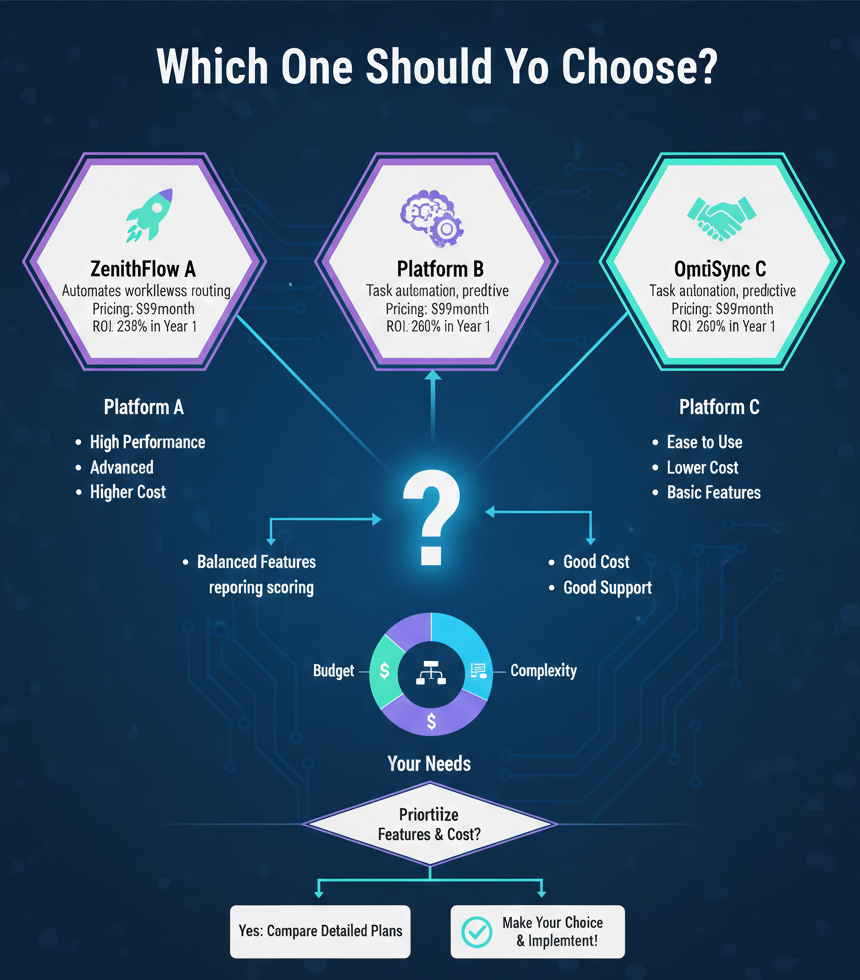
There’s no definitive answer, but here’s a quick guide based on business needs:
-
AWS: Best for enterprises requiring the most mature cloud ecosystem with extensive global infrastructure.
-
Azure: Top choice for organizations with heavy Microsoft integrations or hybrid cloud needs.
-
Google Cloud: A strong contender for startups and companies focused on data analytics, machine learning, and flexible pricing.
🏁 Final Summary
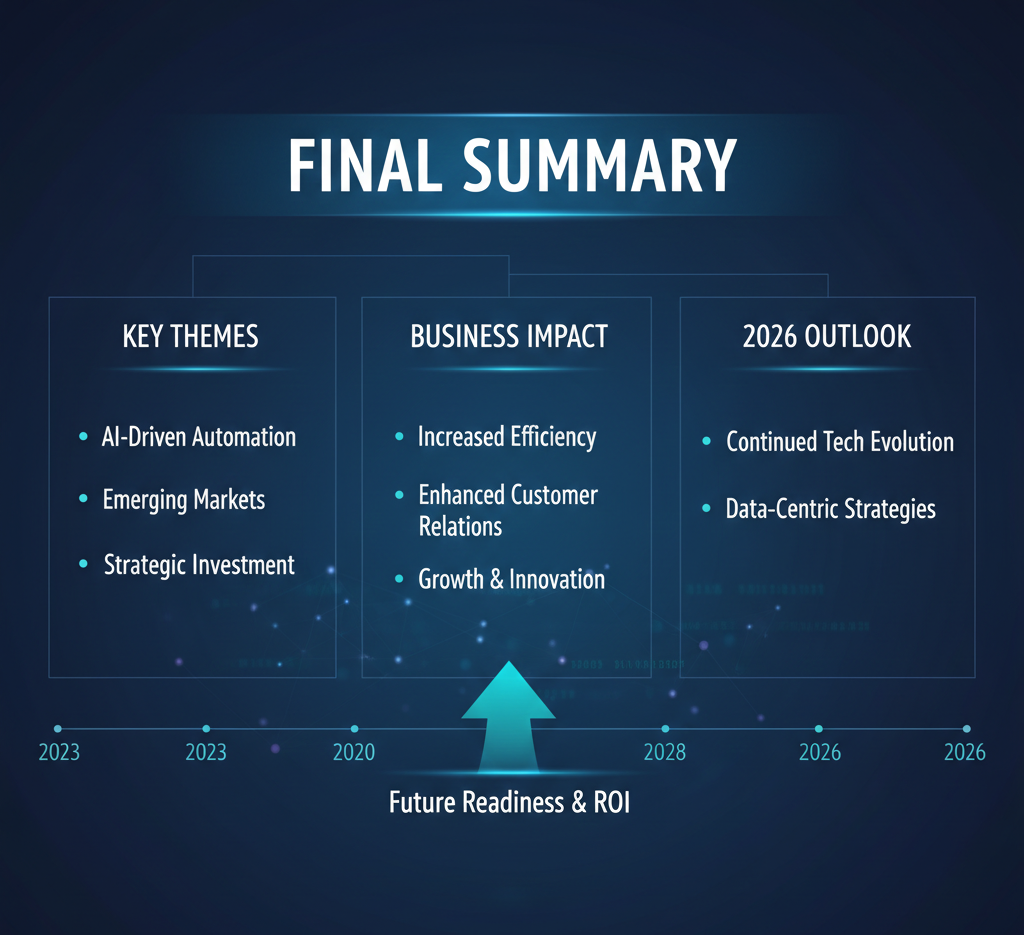
In 2026, AWS, Azure, and Google Cloud remain the three leaders in cloud computing. While their pricing models overlap, each excels in different areas — from enterprise integrations to AI capabilities. Understanding these nuances will help you forecast cloud costs more accurately and select the platform that aligns with your technical goals and budget constraints.