

Enterprise Digital Transformation Software: Tools That Drive Growth & Efficiency in 2026
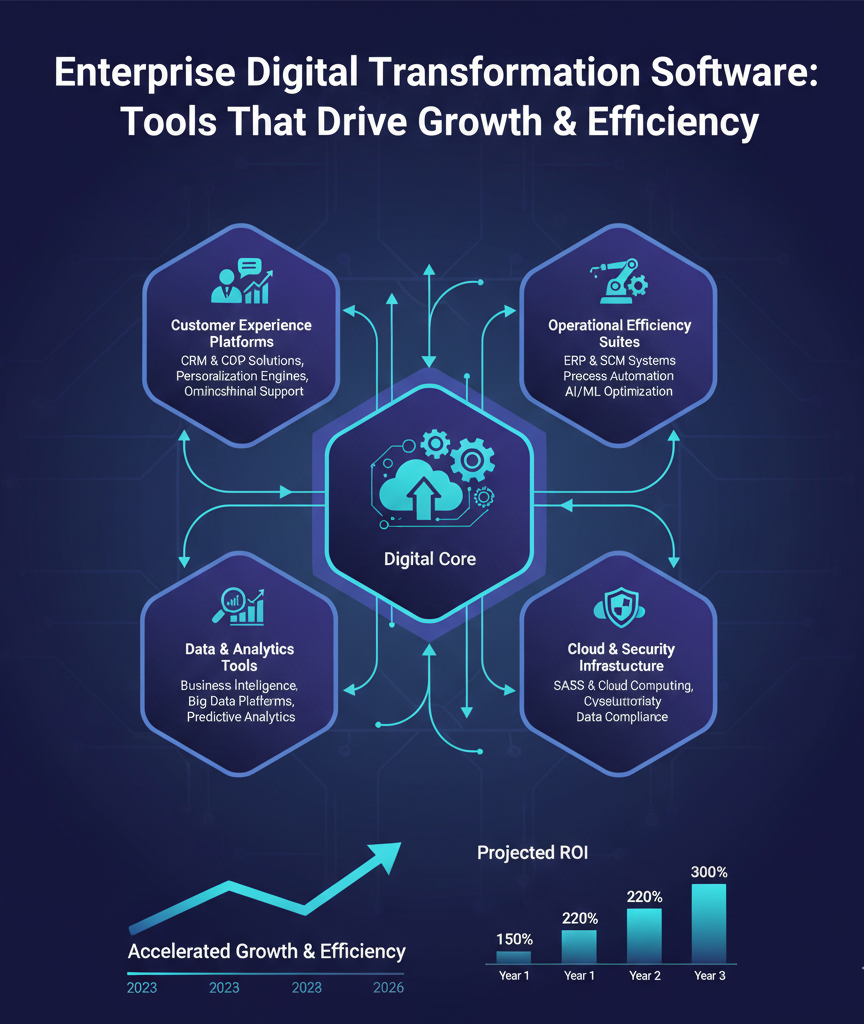
In today’s fast-moving digital economy, enterprises can no longer rely on isolated systems and manual processes. Digital transformation software — especially platforms that automate workflows, integrate data, and provide actionable insights — has become a cornerstone of growth and operational efficiency. These tools help businesses reduce complexity, strengthen collaboration, and transform raw data into meaningful decisions.
Below is a practical guide to the leading digital transformation solutions for enterprises in 2026, how they work, and why they matter.
🚀 What Is Digital Transformation Software?
Digital transformation software refers to a suite of technologies and platforms that modernize business processes, connect data across departments, and automate routine tasks. The goal is not just to digitize operations — but to enable agility, improve productivity, and unlock new revenue opportunities.
Common capabilities include:
-
Workflow automation and business process orchestration
-
Unified data analytics and real-time decision-making
-
Integration across systems (ERP, CRM, HR, finance)
-
Enhanced collaboration and cloud productivity
-
AI-driven insights and predictive intelligence
🧠 Core Digital Transformation Tool Categories
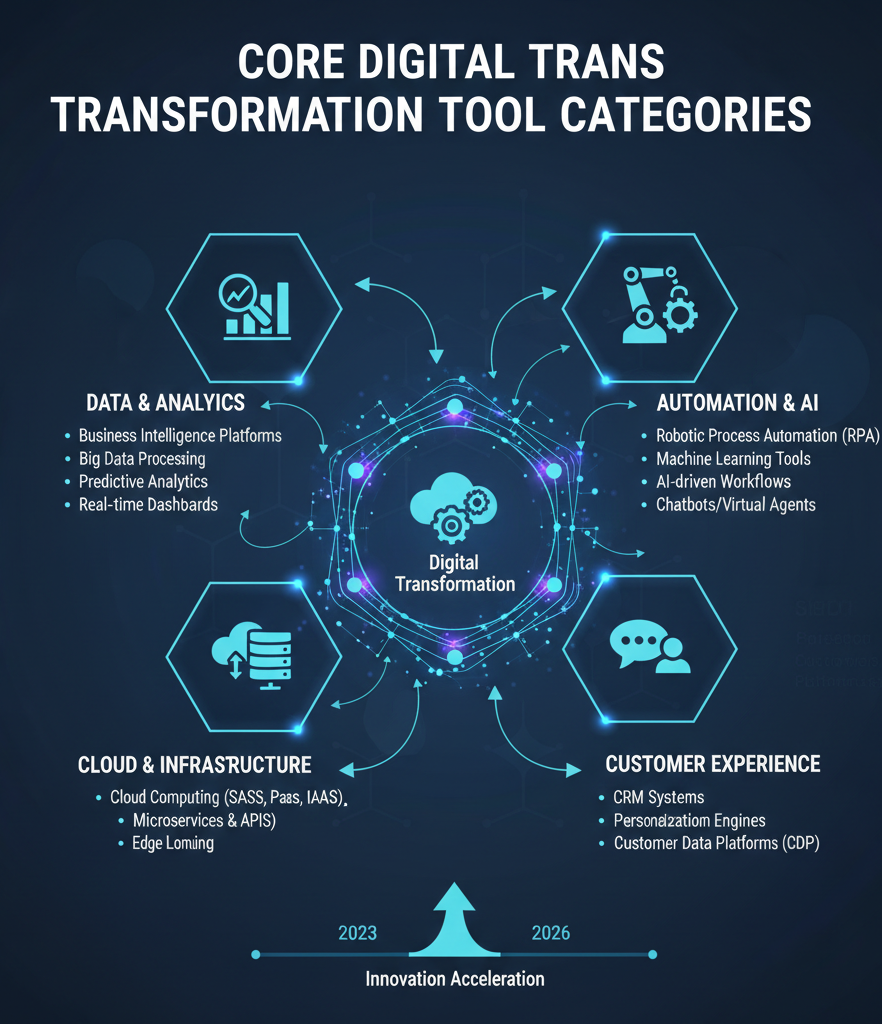
1. Enterprise Resource Planning (ERP) Systems
ERP software remains a foundational element of transformation. These platforms unify critical business functions — such as finance, supply chain, human resources, and procurement — creating a single source of truth for enterprise data.
Top ERP Solutions:
-
SAP S/4HANA — A powerful cloud ERP that provides real-time analytics and AI-enhanced automation, ideal for large global enterprises.
-
Oracle Cloud ERP — A robust and scalable suite supporting finance, procurement, and risk management with deep automation.
-
Microsoft Dynamics 365 — Combines ERP and CRM capabilities with native integration into Microsoft 365 and Azure environments.
-
Odoo — A modular and customizable platform that blends ERP, CRM, and business operations into one tool.
By consolidating processes across departments, ERP tools reduce inefficiencies, improve visibility, and support data-driven decisions — key drivers of enterprise growth.
2. Business Process Automation & RPA
Automating repetitive, rule-based tasks frees up human talent for higher-value activities. Robotic Process Automation (RPA) tools, particularly those with AI capabilities, can handle everything from invoice processing to supply chain updates.
This leads to:
-
Faster process cycles
-
Fewer errors
-
Lower operational costs
Examples include platforms like UiPath and Automation Anywhere (widely used in enterprise environments).
3. Low-Code/No-Code Platforms
Low-code and no-code development tools help enterprises quickly build and iterate business applications without heavy engineering resources. These platforms empower business users to design custom workflows, dashboards, and integrations, accelerating transformation.
Leading platforms often integrate with existing systems and support rapid deployment, cutting development time from months to weeks.
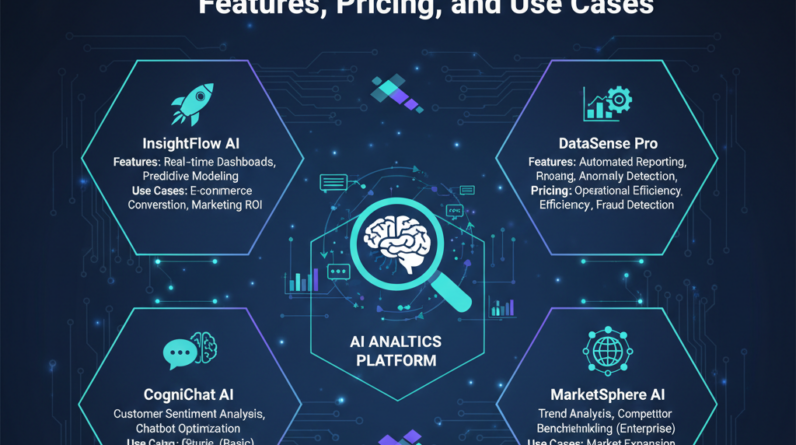
4. AI & Data Intelligence Platforms
Transformational software today is expected to do more than collect data — it must interpret it intelligently.
AI-powered analytics platforms help enterprises:
-
Predict trends
-
Anticipate risks
-
Identify patterns across datasets
-
Automate insights delivery
These tools are essential for strategic planning and rapid response to market shifts.
5. Cloud Collaboration & Productivity Suites
Modern enterprises operate across distributed teams, time zones, and sometimes continents. Cloud collaboration platforms like Microsoft Teams, Slack, and Google Workspace centralize communication, file sharing, and project management — keeping teams aligned and productive.
These platforms also integrate with business systems, ensuring work happens in context and data isn’t siloed.
🛠️ Why These Tools Matter for Growth & Efficiency
Digital transformation isn’t just a technology upgrade — it’s a strategic shift. The software described here delivers value in several important areas:
Enhanced Operational Efficiency
Automation and integrated platforms eliminate manual work, which saves time and minimizes costly errors.
Actionable Data Insights
With powerful analytics and AI, enterprises can make informed decisions faster, giving them a competitive edge.
Scalability and Flexibility
Cloud-native solutions allow businesses to adapt quickly to growth, seasonal demands, or new market opportunities.
Improved Collaboration and Innovation
By connecting teams through unified platforms, organizations break down silos and foster innovation across departments.
📈 Future-Ready Capabilities
In 2026, digital transformation tools are increasingly:
-
AI-enabled: Using machine learning to automate decisions and predict outcomes.
-
Integrated: Working seamlessly across ERP, CRM, analytics, and workflow systems.
-
Cloud-First: Supporting remote and hybrid work with scalable architecture.
Enterprises that adopt and evolve with these platforms are better positioned to innovate, optimize operations, and grow sustainably.
✔ Final Takeaway
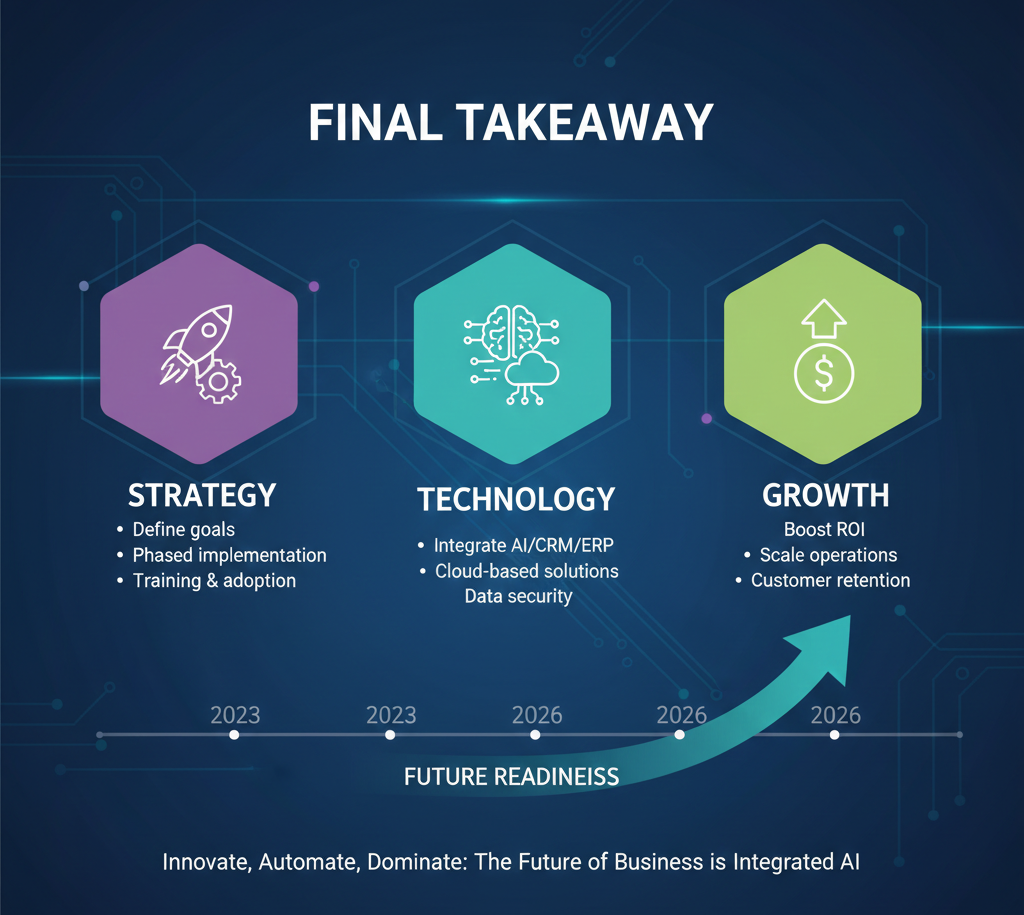
Enterprise digital transformation software in 2026 is about unifying systems, automating processes, and extracting insights that drive smarter decisions. From ERP and automation platforms to AI-powered analytics and cloud collaboration tools, these solutions help organizations increase efficiency, reduce operational costs, and accelerate growth in an increasingly digital world.