

Best CRM Software for Digital Companies in 2026 (Sales, Marketing & Automation)
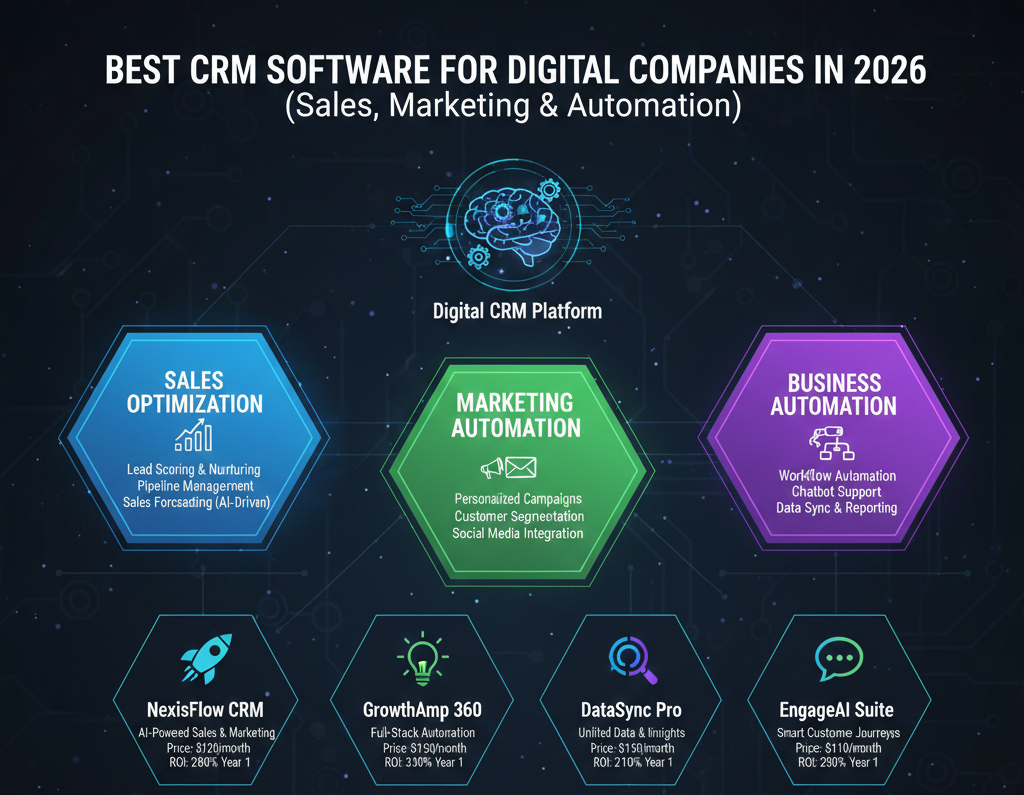
Customer Relationship Management (CRM) software is no longer a “nice-to-have” for digital companies — it’s absolutely essential. In 2026, the best CRMs do far more than store contacts. They unify sales, marketing, customer support, and automation into one system that helps businesses grow smarter, close deals faster, and deliver seamless customer experiences.
This article walks through the top CRM platforms for digital companies, explains their core features, and highlights how they support sales, marketing, and automation in a world where customer expectations are higher and competition is fierce.
Why CRM Matters for Digital Companies in 2026
Digital businesses operate in real time — and so should their customer engagement systems. A modern CRM:
-
Tracks customer interactions across channels
-
Enables personalized marketing at scale
-
Automates repetitive workflows
-
Provides actionable insights and reporting
-
Supports sales forecasting and pipeline management
Whether you’re a startup, SaaS company, or online retailer, the right CRM becomes a central hub that aligns your teams and elevates your customer experience.
Top CRM Platforms Worth Considering in 2026
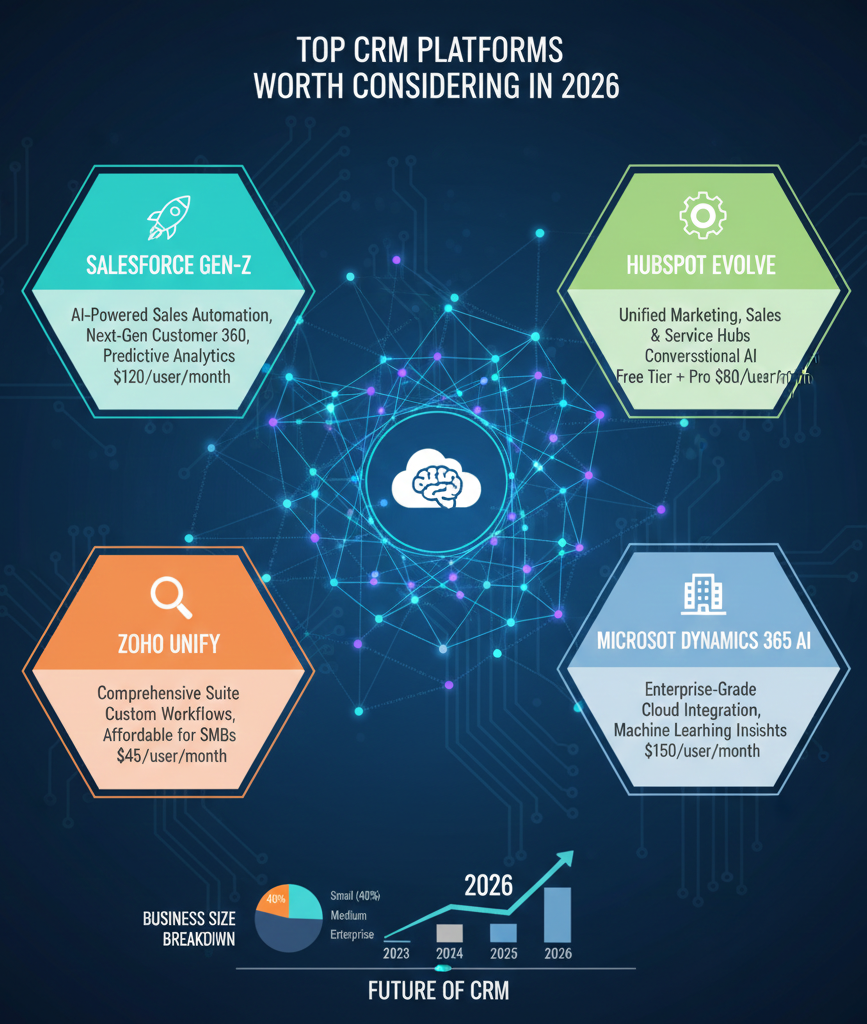
Here’s a breakdown of the most impactful CRM tools for digital companies today.
1. HubSpot CRM — All-In-One Platform for Growth
HubSpot remains one of the most popular CRM solutions, especially for digital companies that want an integrated system without complexity.
Key Strengths:
-
Unified dashboard with sales, marketing, and service
-
Drag-and-drop automation builders
-
Built-in email templates, sequences, and lead scoring
-
Easy reporting and dashboards
-
Strong free tier with scalable upgrades
HubSpot works well for small to mid-sized teams looking to centralize their workflows without juggling multiple tools.
2. Salesforce — Enterprise-Grade Customization & AI
Salesforce is widely regarded as one of the most powerful CRM platforms, especially for larger digital companies or those with complex processes.
Best Features:
-
Deep customization & automation capabilities
-
AI-driven insights with Salesforce Einstein
-
Advanced sales forecasting and pipeline management
-
Vast ecosystem of integrations and apps
For companies that need granular control and custom workflows, Salesforce delivers enterprise-level functionality — though it may require more setup and training than simpler tools.
3. Zoho CRM — Flexible & Cost-Effective
Zoho CRM offers strong value for digital teams balancing features with affordability. It’s part of a broader suite of business tools, which makes it ideal for companies that want more than just CRM.
Highlights:
-
Sales automation and customer analytics
-
AI assistant for predictive sales insights
-
Seamless integration with Zoho ecosystem (email, finance, helpdesk)
-
Highly customizable dashboards
Zoho is particularly appealing for growing companies that want scalability without a steep price tag.
4. Microsoft Dynamics 365 — Best for Enterprise Workflows
Microsoft Dynamics 365 blends CRM and ERP capabilities, providing a unified platform for sales, marketing, customer service, and operations.
Why It Stands Out:
-
Deep integration with Microsoft 365 and Teams
-
AI and analytics powered by Microsoft Azure
-
Robust automation and customer journey mapping
-
Industry-specific templates for faster deployment
For digital companies already invested in the Microsoft ecosystem, Dynamics 365 delivers reliability and strategic alignment.
5. Pipedrive — Sales-Focused & Intuitive
Pipedrive is known for its clean interface and deal-centric CRM design, making it a strong choice for sales teams.
Core Advantages:
-
Visual pipeline with drag-and-drop deal stages
-
Email automation and activity tracking
-
Customizable sales workflows
-
AI sales assistant with actionable recommendations
If your primary need is manageable and effective sales tracking, Pipedrive simplifies the process without unnecessary features.
6. Freshworks CRM — AI-Enhanced & Customer-Centric
Freshworks CRM blends sales and marketing automation with AI-driven customer insights. It’s designed for teams that want an intuitive experience with smart automation built in.
Standout Capabilities:
-
Freddy AI assistant for predictions and suggestions
-
Multi-channel contact management (email, phone, chat)
-
Integrated marketing automation tools
-
Contextual customer timelines
Freshworks is ideal for digital teams that value insights and automation without complexity.
Key Features to Look For in CRM (2026)
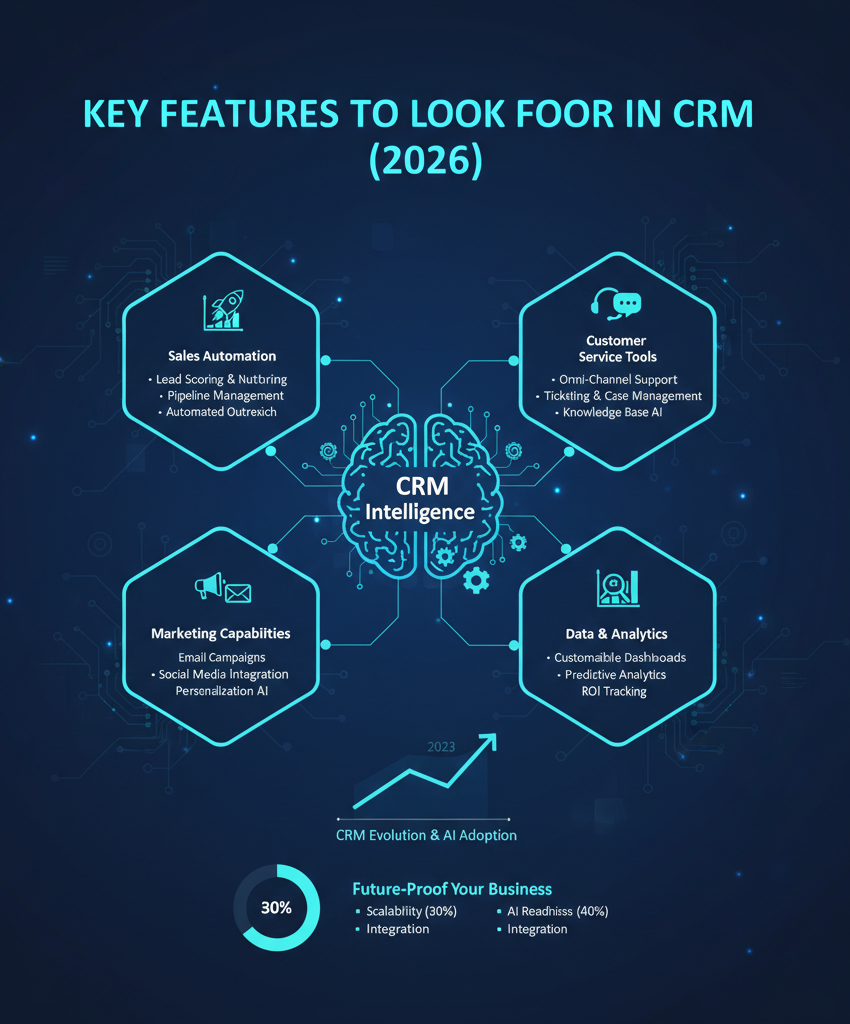
When choosing CRM software today, prioritize the following capabilities:
📈 Sales Automation
-
Automated follow-ups and task reminders
-
Deal scoring and pipeline visibility
-
Forecasting and performance metrics
These features help sales teams work efficiently and reduce manual administrative work.
📣 Marketing Integration
-
Email campaigns and sequences
-
Lead scoring and segmentation
-
Landing pages and forms integrated with CRM
A CRM with strong marketing features eliminates data silos and boosts campaign performance.
🤖 Intelligent Automation
-
Trigger-based workflows
-
AI predictions for customer behavior
-
Automated data entry and contact enrichment
Automation accelerates processes and delivers consistent customer experiences.
🔍 Analytics & Insights
-
Custom dashboards
-
Real-time data tracking
-
Predictive sales and churn modeling
Producing insights that inform decisions is a major advantage of modern CRM platforms.
🧠 Integrations & Extensibility
The best CRM systems connect smoothly with:
-
Email platforms
-
Support systems
-
Ecommerce platforms
-
Billing and finance software
-
Messaging and social media apps
Integration increases efficiency and keeps data synchronized across tools.
How to Choose the Right CRM for Your Digital Business
A few factors to weigh before choosing:
-
Company size & growth plans
-
Budget and pricing transparency
-
Ease of onboarding and user adoption
-
Quality of customer support and training resources
-
Integration with your existing tech stack
Most providers offer free trials, so you can test real use cases before committing.
Final Thoughts
In 2026, CRM software is more than a contact database — it’s the central nervous system of digital businesses. The right CRM empowers teams to automate repetitive tasks, unify sales and marketing, deliver personalized customer experiences, and scale operations with confidence.
Whether you’re a startup or enterprise, carefully matching your business needs with CRM features will pay dividends in efficiency, customer satisfaction, and growth.